Structure, directions, and clarity when you are on Steering
Divyam, thank you for sharing your dreams, wishes, and being thoughtful in your life aspirations. The world needs more of such conversations in the families or among the friends or loved ones, for a more meaningful and fulfilling life path.
See your report and the analysis below. You can also download the complete report as a PDF document.
After doing comprehensive study for quantitative and qualitative analysis of Divyam’s aspirations, the family preferences, the support structure, the market dynamics for career prospects, and considering a holistic view of a meaningful life, we advise the following. Please spend some time to read different sections of the report and analysis.
Action—”Divyam, you should plan studying agricultural engineering, or food engineering in specific streams for your life goals, with 90 to 94 percent scope of doing in Grade A from institute example one, two, or three so that you can build a rewarding and family-centric career and life as this report and this study suggests.”
💡Steering for the family vision, collectively
“Divyam will pursue agricultural engineering, combining our family’s farming heritage with modern technology to create innovative solutions for farmers. This path honors our traditions while building new opportunities.”
“Career decisions are often influenced by family and friends, and these always influence the family and the loved ones in future. Steering has worked on Divyam’s inputs to move from uncertainty to clarity and alignment around Divyam’s future. We make sure that everyone feels heard, understood, and is excited about the chosen path and the life.”
- For Divyam: “How to build modern farming tools and dashboards that really serve the farmers’ life and goals.”
- For father: “How traditional farming knowledge becomes competitive advantage?”
- For mother: “How can you help me know about the career growth and financial prospects in agritech?”
- For family: “How this path honors our heritage while creating new opportunities?”
The family ROI
Relationship returns:
- Strengthened family bonds: Shared mission and increased happiness index
- Intergenerational knowledge: Father’s experience supports Divyam’s skills
- Pride in family Legacy: Modernizing family traditions and their business
Risk mitigation returns:
- Diversified family income: Technology skills applied to agricultural base
- Future-friendly career: Growing AgriTech market (23% annual growth)
- Multiple career paths: Entrepreneurship, family business, consultancy
Individual statisfaction:
- Divyam’s confidence: Clear path aligned with passion and family values
- Father’s pride: Son building on family heritage rather than rejecting it
- Mother’s delight: Clear career progression and financial prospects
Industry reports on career prospects
Salary trends and career references
💡Support each other by building conversations
- Mother’s job security concerns: “How might we validate career prospects together?”
- Father’s knowledge integration: “How might farming experience become career advantage?”
- Divyam’s identity integration: “How might I honor tradition while pursuing innovation?”
Family Response Framework: For example, when father says: “I want him to use our farming knowledge”
- Validate: “Your expertise is a real competitive advantage.”
- Explore: “How might traditional knowledge combine with modern technology?”
- Collaborate: “How might we plan the farming challenges for Divyam to solve?”
Family Response Framework: For example, when mother says: “I am not sure of the career growth or job security in this line.”
- Validate: “Your concern shows how much you care about Divyam’s stability.”
- Explore: “What information would help you feel confident about career prospects?”
- Collaborate: “How might we research and validate market opportunities together?”
Building the convergence of individual and family expectations:
- “How might individual strengths serve family goals?”
- “What would family support look like for this individual path?”
- “How can family wisdom guide individual decision-making?”
💡How the family should see this decision
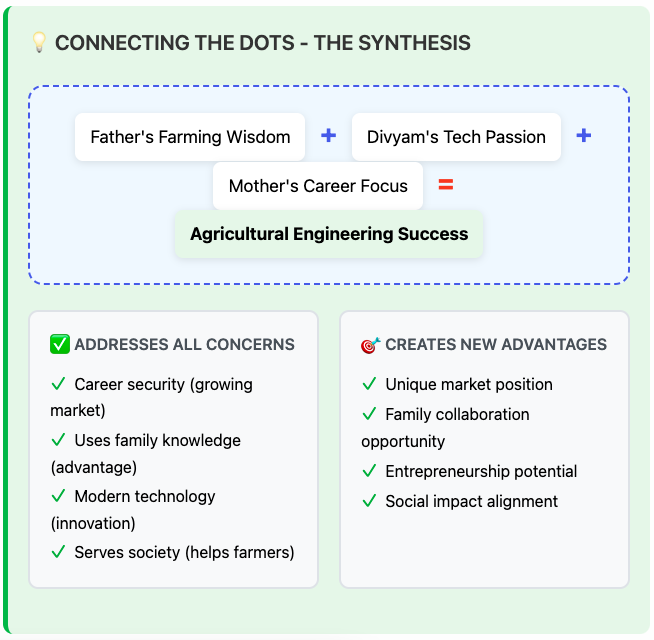
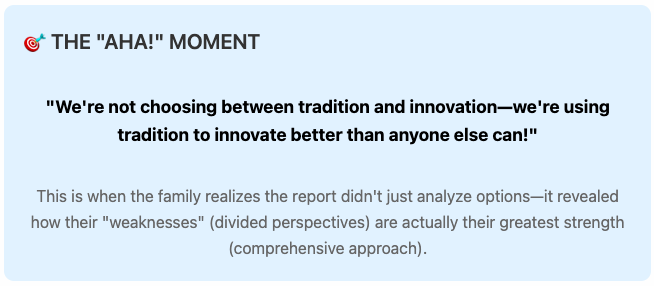
A quick look at how the Steering analysis takes care of family’s concerns, their apprehensions, and their individual viewpoints—we try to build bridges to find career options that serve the whole family, collectively.
In specific cases, we map this selection process and the journey with our library, detailed reference with screenshot later in this report.
💡Support each other by building conversations
We hope that you and the family and loved ones have gained a lot of clarity on the career path and how it helps your vision and dreams, collectively. As the next step, you can set up a call with us any time till 15 September 2025 (within 30 days of publishing this report).
 Each one of us is a story
Imagine how a bird family might be feeling one day, somewhere in the world. They are happy in their own ecosystem because a student—Kismet Sinha studied birds in their college. Kismet found her clarity and mission via Steering (see Kismet’s letter to her mother.)
Kismet found about Steering from Divyam—this is how new stories shine in the world.
This is a quick reference summary of the Steering report. In the three sections below, you can see how we support the child’s thinking and their vision and understanding of life, and how it builds the family collectively.
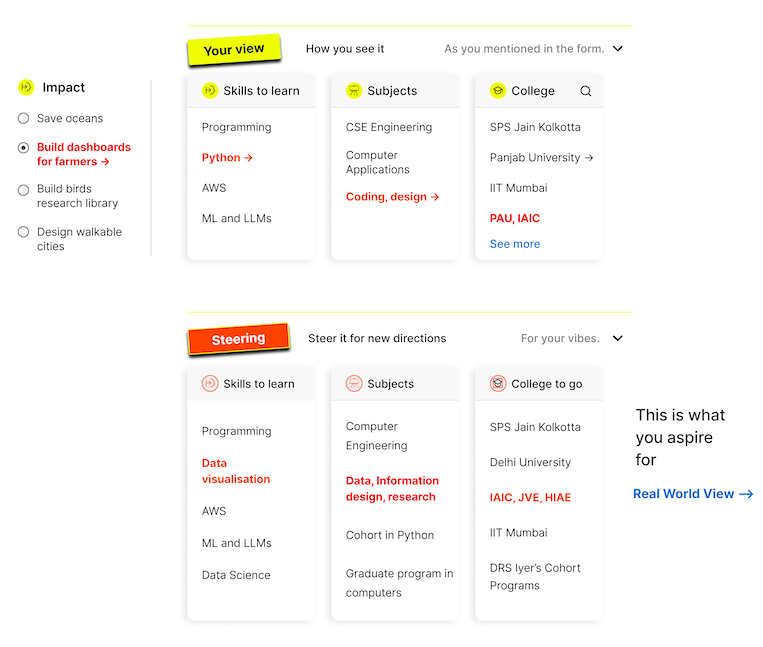
Before taking the assessment, you had at least some college path as you shared in your answers. This ‘Before and After’ section shows you the contrasting paths—your vision, and how Steering proposes based on in-depth analysis.
See the complete report where we support this analysis and why our proposed path is a better option for your dreams and aspirations.
Divyam and the whole family will benefit a lot, and holistically, if Divyam studies Agriculture Engineering, and applies those learnings with the help of the family’s experience to design next-generation dashboards for the farmers and farming stakeholders.
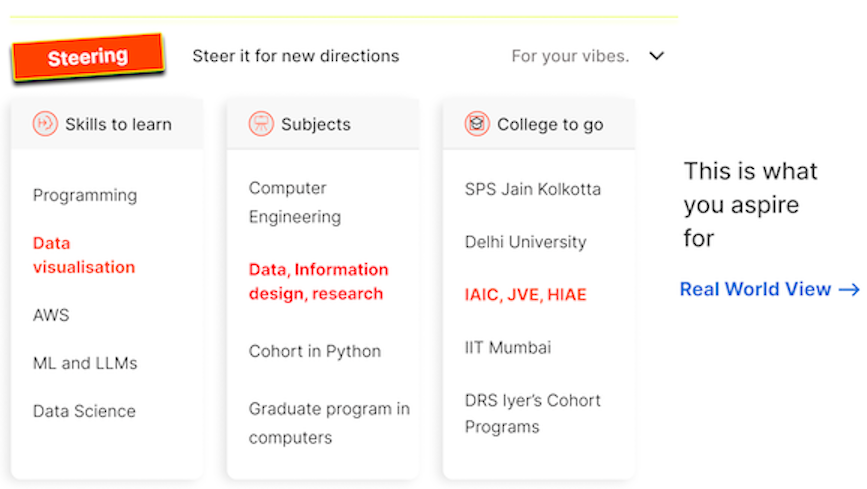
In this mapping, you can see what skills you should aim to learn, in what kind of subjects, and we have listed a few colleges that offer related programs. (In the actual report, this mapping is more comprehensive, and with the right context.)
In the detailed report, you will see:
- A few alumni from those universities and colleges who have studied the same or similar subjects in such programs
- The LinkedIn profiles or business profiles of those alumni
- Some case studies and references of how these degree programs help the students
- Industry reports that might be useful for you, and the family.
Here are some references to support this direction of your dreams.
- Agriculture engineering applications—the trends and opportunities (a video)
- A paper on the growth of technology in agriculture practices (link)
- A McKinsey report on Agritech in India (link)
- A long post on the career scope, by Farmonaut (link)
- India’s agritech market, analysis and forecast (2025-2033) (link)
- A report on agriculture engineering salaries (link)
- Salaries and scope (US)
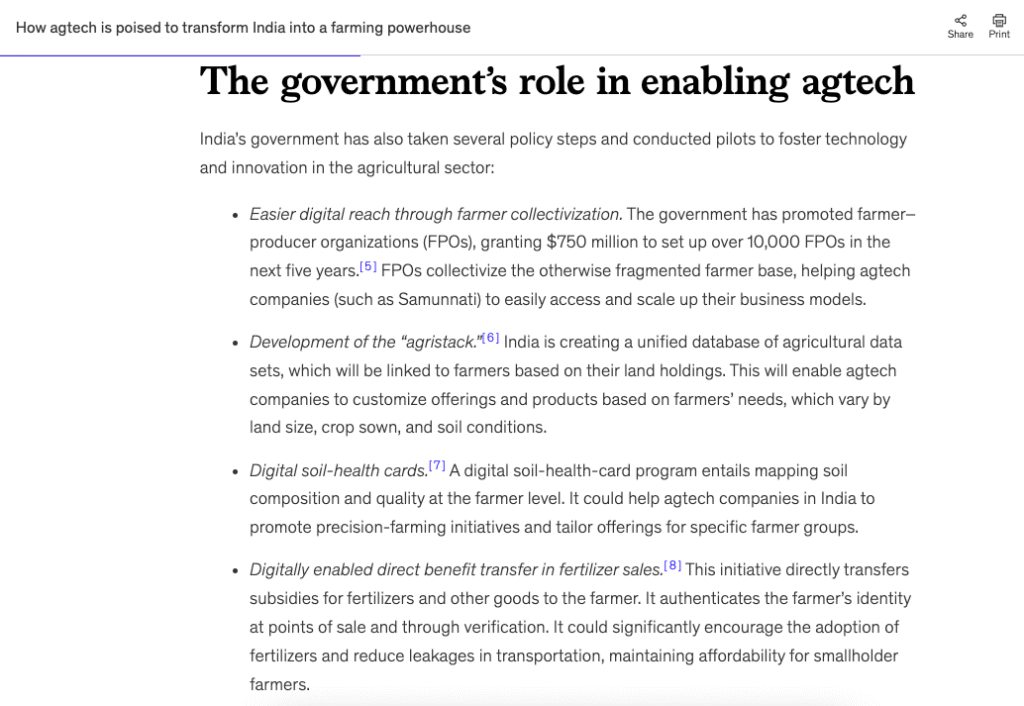
Here are a few references to support your undertanding and your decision. These include some useful and related research papers., or case studies, and existing tools in the market in the same category.
Readings
- Software tool example: Farm analytics
- Paper: Data analytics in agriculture
- Research paper: Optimizing yield, a predictive model for harvest optimization
Industry references
- LinkedIn profile references in this career, and in related career options
- Industry reports for the trends and challenges in this career
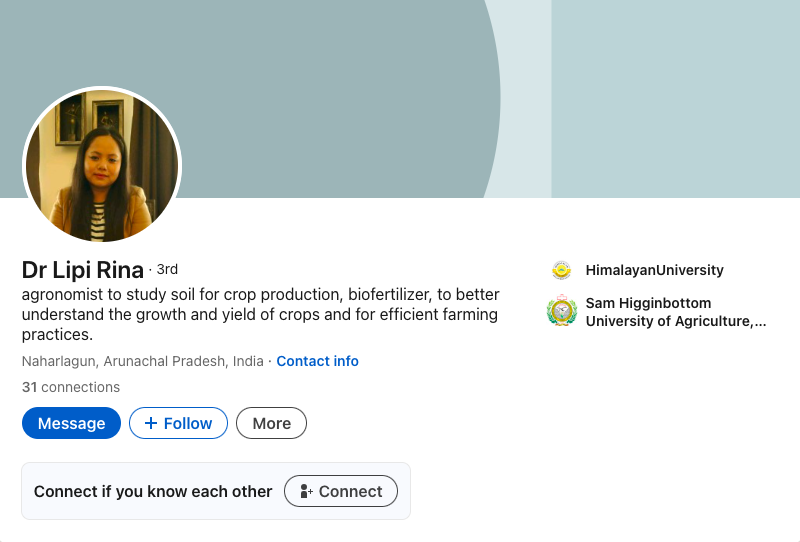
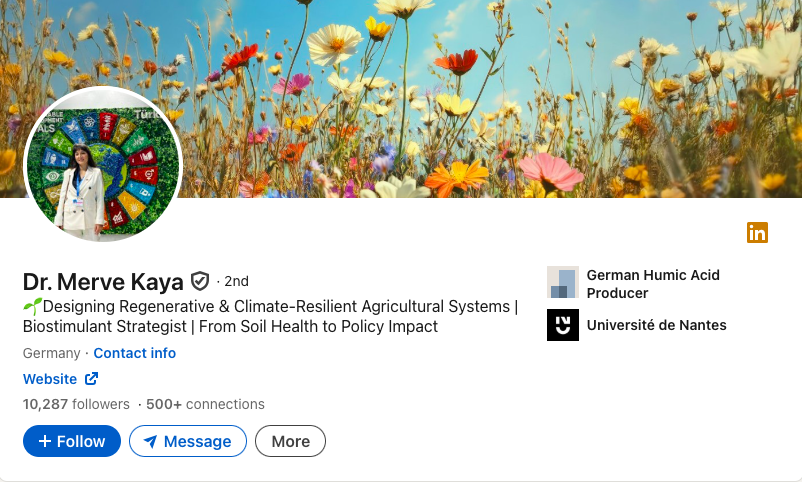
In specific cases, we map this selection process and the journey with our library, detailed reference with screenshot later in this report.
This analysis helps you move from uncertainty and confusion to clarity and confidence, and for the whole family and your loved ones. Take your time, grab a coffee and relate these findings and the analysis to where you want to invest your most important years of life in a college, for your life dreams.
💡Divyam’s self-discovery—answers to the questions
[Q 1]: If you current state is something as – “I am not sure what subjects I should study, and how these can help me for my career, my interests, and my goals, and for my lifestyle”, can you describe this confusion and the state of mind, and the question, in your own language below?
(For example—”should I take architecture, or food (because my friend studied it and now he has got a very good job in Australia), or chemical engineering, or web design and UX, or should I prepare for civic services? How will it help, will I be able to do it?) Do not just guess—think about it. What kind of small or big issues or problems or gaps bother you where you wish you could do something.
[Divyam replies]: I want to study something related to soil or agritech. I belong to a farmers’ family and I want to either make some harvesting tools or machines, or do some research into soil types that can help farmers.
I do not know the career scope in this field, and what subjects I should study. Which colleges provide these kinds of degree programs and how I can compare these for specialization and their facilities for labs and infrastructure.
I have one more issue, my family is divided into this choice. My father is supporting but my mother wants me to study something that is more and directly career-centric. For example computer software, or space science.
[Q 2]: Given a chance when you grow up, what problems do you want to solve for yourself, or friends and family, or your neighborhood, society, country, a specific segment in the public, for a certain organization, agency, or department, or for the world in general?
(For example—Forest fires, save oceans, help the poor in hospitals, build free software, run an agency to help stressed bus drivers, work on data policy, gender equality, wildlife conservation, making sports shoes, running a gym, training athletes, saving rare birds, and so on. Be honest and clear about your aspirations, nobody is watching you.)
[Divyam replies]: I want that farmers in different regions should have access to information about what kind of crops will yield maximum returns, depending on the weather forecast, the soil’s behavior, the budgeting, and other factors that play an important part in their yield and harvest.
Right now, there is a lot of guess work and they rely on their past experiences, and community knowledge, or sometimes on announcements by the government. I think they should have reliable information based on data, so that they make best use of their land resources.
💡Thoughts Map—A visual to connect the thoughts
A student has a variety of thoughts in their minds about colleges and careers—subjects, stream, skills to learn, college, parents and friends, their own interests and dreams. This map connects all these thoughts, for a visual and quick reference.
This is not a complete map for privacy reasons—this is an example of the map as a concept, to show you how it starts bringing clarity in their minds.
If you notice, the goal is to have a map of their big picture dreams and vision of what really concerns them in the world, what skills they want to learn and apply at work, and for what kind of educational courses and programs. We work with users to find the paths, the journey, and the vibes in this whole cycle.
💡Our analysis so that you can steer well
Divyam has a lot of clarity for what he wants to learn and do. However, he has doubts if there is enough demand for these skills in real world careers and whether there are the right kind of courses and degree programs that teach such subjects.
….
….
….
The opportunity…
….
….
….
….
The way forward…
….
…
….
Possible steps…
….
….
….
The choices…
….
….
….
The decision framework…
….
….
….
We hope that this report serves as a good reference for Divyam’s clarity while selecting the right courses and degree programs for higher studies.
In specific cases, we map this selection process and the journey with our library, detailed reference with screenshot later in this report.
💡The vibes and the family
Based on your answers, we share a vibes quadrant that shows the clarity curve in your thoughts and dreams. This example shows where Divyam starts and where he aspires to be. Steering helps you design this path and to identify what exactly you need to do to address the gaps, for the holistic family-centric journey.
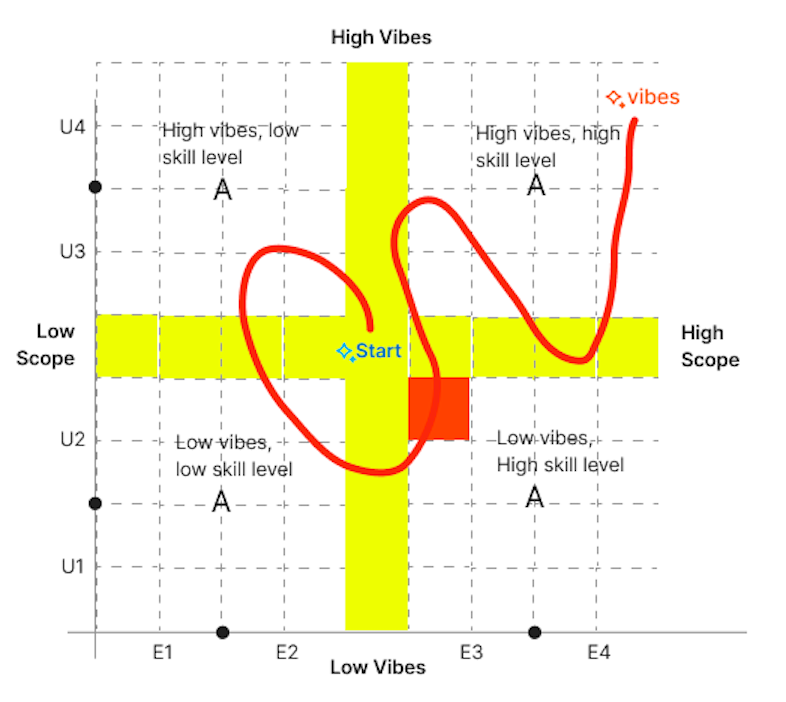
In this process, we involve the students to get more information about their confusion, their questions, their state of mind for certain preferences, and how they see the gap between their dreams and the road ahead.
A student’s career is a lot about family dynamics too regardless of the family size or structure, and this is often an underrated aspect of the process. Whether the student completes a degree in industrial design, or in agriculture engineering, or in soil behavior—how it builds the family’s thinking and expectations about the possible career options, the kind of work their kid might be doing after finishing the college—these are systematically related to how the family grows together and bonds together.
💡The real opportunity in the market
Note: Of course these trends and numbers are broad for all types of degrees and practices combined. A lot depends on the candidate’s own capability, their performance in the college, their aptitude, their response to the internship times, and other factors.
💡Recommended courses and programs
University name, country and city
- Agriculture University, Jodhpur
- Website URL
University name, country and city
- Punjab Agriculture University, Ludhiana
- Website URL
University name, country and city
- REVA University
- Website URL
University name, country and city
- AKS University
- Website URL
University name, country and city
- Data Science for Agriculture, Germany
- Website URL
We can discuss these opportunities in our call. You can see these programs and make notes to shortlist some of these options.
A few readings, case studies, and industry insights
Readings
- Software tool example: Farm analytics
- Paper: Data analytics in agriculture
- Research paper: Optimizing yield, a predictive model for harvest optimization
- More insights
- A White Paper
- A video (link)
Industry references
- LinkedIn profile references in this career, and in related career options
- Industry reports for the trends and challenges in this career
In specific cases, we map this selection process and the journey with our library, detailed reference with screenshot later in this report.
The mapping
This section talks about the mapping—this is an optional reference as Divyam does not consider it a high priority need.
- Career interest because of the family history and real world problem
- Knows what he wants to learn and why
- Has some confusion about the subjects
- Not sure about which degree can help, and whether it will be really useful
In specific cases, we map this selection process and the journey with our library, detailed reference with screenshot later in this report.
The engine and the system—how Steering works
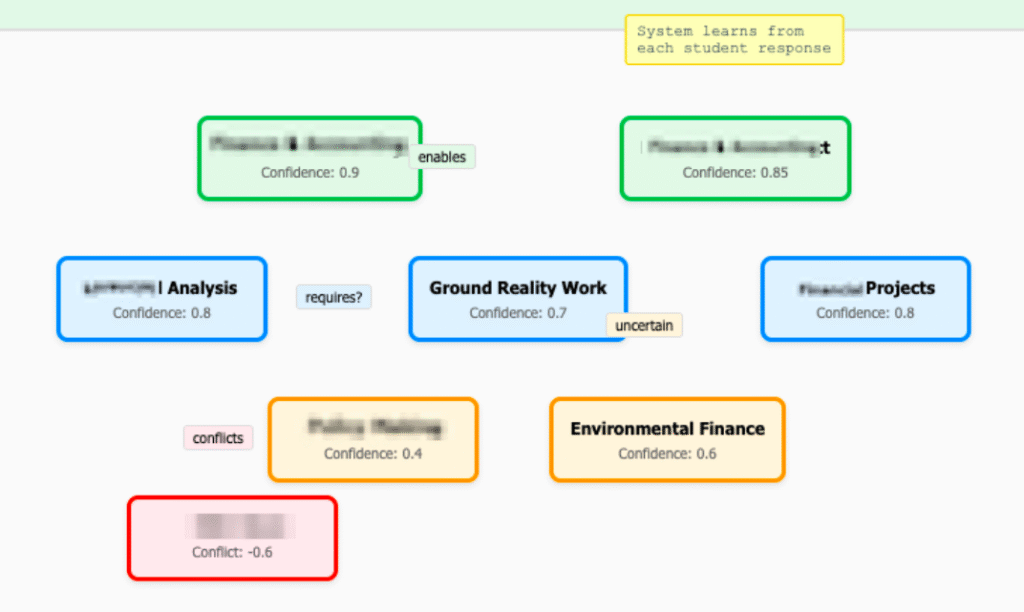
This is a special section that explains the engine behind how it works. This is not part of the actual report that students get by default. However if they request us to see how it works, we share these details in those cases.
Taxonomy clustering and mapping
Our intelligent domain model extracts the information based on what terms the students use in their response, and it works on the taxonomy clustering and relationship mapping by assigning objective scores to their thoughts, opinions, and preferences.
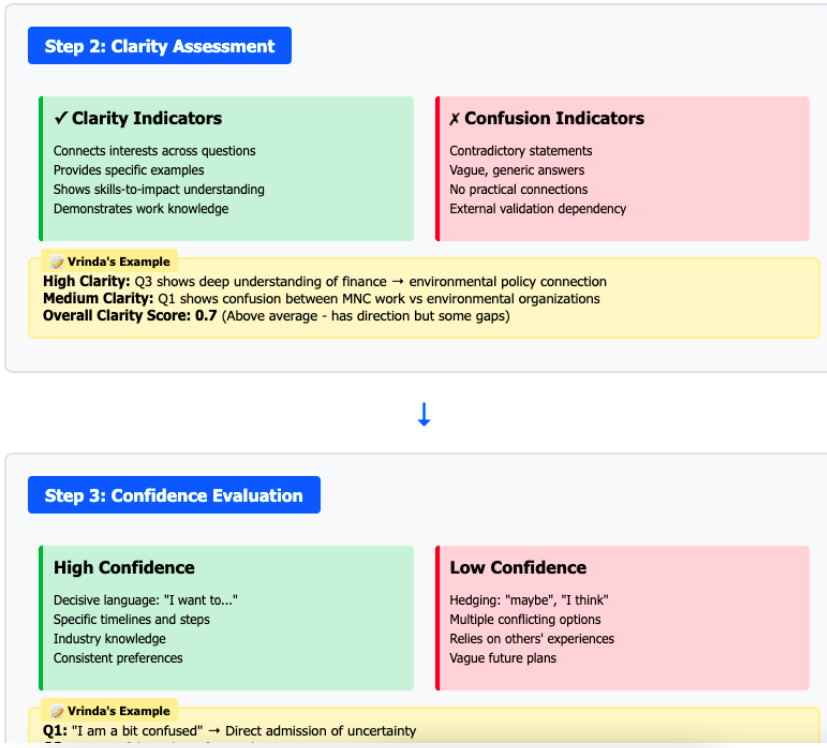
We have designed a system that is based on the conversations—the students’ response in the onboarding form, the language and the terminology they use for specific career paths, subjects, courses, colleges, and their questions and uncertainties.
This section is for the two cycles after we have the 1:1 call. As part of our mission, you have a chance to be on steering for the longer journey.
Checkpoint
- Quarterly checkins to support your journey—three times in the year
- Internship support—connecting with mentors or experts, and with the opportunities
Zoomin
- Career pivot if required for any reasons (NUEPA says India’s college dropout rate is 25 percent, link)
- Additional on-demand support where your career intersects with the family dynamics
My notes
Based on your answers, we share a vibes quadrant that shows the clarity curve in your thoughts and dreams. See an example below for where Divyam starts and where he aspires to be—this quadrant helps you identify what exactly you need to think to address the clarity and the gaps.
19 July 2025
16 July 2025